|
The Story of Mission San Jose Mission San José has always been a sacred place of pilgrimage, devotion, and spiritual renewal. While many come to the Mission for its history, we cherish it as a site of special grace. This is a holy place where the faithful come to seek spiritual guidance, healing, and closeness to God. In recognition of the Mission’s role as the birthplace of the Catholic faith in the East bay and the Diocese of Oakland, Bishop Michael C. Barber, S.J., has designated the Mission church as the Diocesan Shrine of Saint Joseph.
The Mission Era Mission San Jose was founded on June 11, 1797, by Father Fermin Francisco de Lasuen. It is the fourteenth of the 21 Spanish Missions in Alta California. They were founded to secure Spain’s claim to this land and to teach the native people Christianity and the Spanish way of life. The site chosen for the only Mission on the east side of San Francisco Bay had been inhabited for countless generations by the Ohlone Indians. Their village at this site was known as Oroysom. The Ohlones lived close to the land in harmony with nature, taking what they needed for their sustenance but never wasting irreplaceable resources. What we could call ecology today was a way of life for them. Their food included seeds, roots, berries, acorn meal, small game, and seafood. Three years after the founding of Mission San Jose, several hundred Ohlones had come to live at the Mission. They were introduced to a new way of life by the Spanish Franciscan missionaries. Thousands of cattle roamed the Mission ranges. Acres of wheat and other crops were planted and harvested under the direction of the padres. The fully developed Mission was a self-sustaining village occupied by local natives, a few soldiers, several artisans with families, and one or two priests. According to Spanish law, the Mission’s lands and resources belonged to the natives and were to be put in their control when they had learned to manage it in the Spanish way. An organ for Mission San Jose was requested by the Pastor in correspondence with the Bishop of Mexico in 1818 but this request was denied. As far as we know, Mission San José, nor any of the other Missions in Alta California, never had an organ. The musical scene, however, was very lively at Mission San Jose. Secular and religious music were freely interchanged and performed with great gusto using string, woodwind and brass instruments. Several original compositions have survived.
Secularization Mexico won its independence from Spain in 1821. The California Missions continued to prosper under Mexican rule until the Secularization Act of 1833. In 1836, Jose Jesus Vallejo was appointed civil administrator of Mission San Jose. The lands were divided into ranchos and transferred to local prominent Mexican families. What was left of the Mission began to decline, and over time, the native populations were scattered. Very few were given their land, and many died of disease and starvation. After California achieved statehood in 1850, the United States government returned ownership of a small portion of the Mission’s original land back to the Catholic Church, and the Mission became St. Joseph Parish in 1853. The 1868 Earthquake A tremendous earthquake in 1868 on the Hayward Fault destroyed the 1809 adobe church. The rubble was cleared away and a new church of wood was constructed directly above the tile floor and stone foundation of the adobe church.
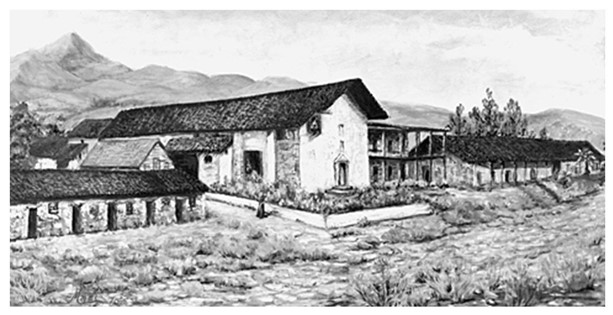
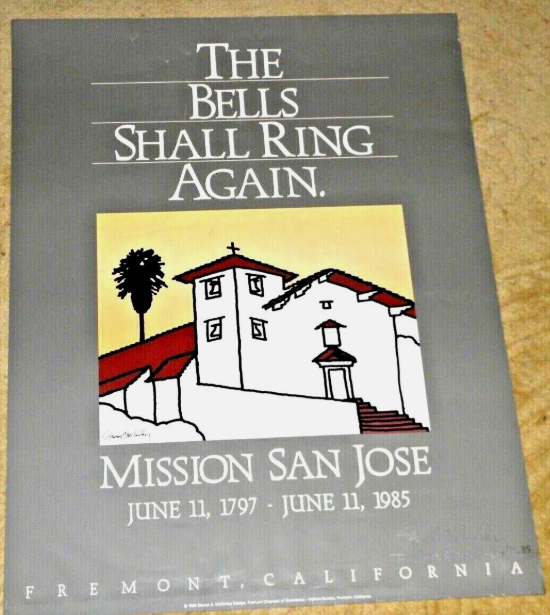
Original art by Steven A. McKinley The Bells Shall Ring Again Many people worked to make the dream of a restored adobe church a reality. Floyd L. Begin, the first bishop of the Diocese of Oakland, approved the start of planning in 1973 to rebuild the 1809 adobe church on its on its original site. St. Joseph Parish pastors involved in the planning stages were Monsignor James E. O’Neill and Fr. John S. Williams. Retired pastor Fr. William M. Abeloe, a noted California historian and first curator of the mission museum, was an important part of the restoration planning effort until his death in 1982. On January 13, 1975 Father Williams, Frank Donahoe, and Robert B. Fisher incorporated the non-profit Committee for the Restoration of Mission San Jose (CRMSJ) to “initiate, sponsor, promote and carry out plans…(for) the restoration of Mission San Jose.” CRMSJ was a valuable resource to the Diocese in promoting the restoration, raising funds, and providing parishioner and local citizen support. John S. Cummins, the second bishop of Oakland, approved the start of the reconstruction project in 1982.
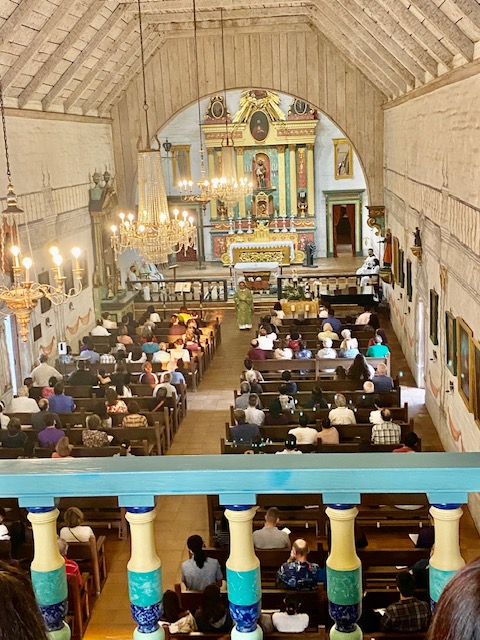
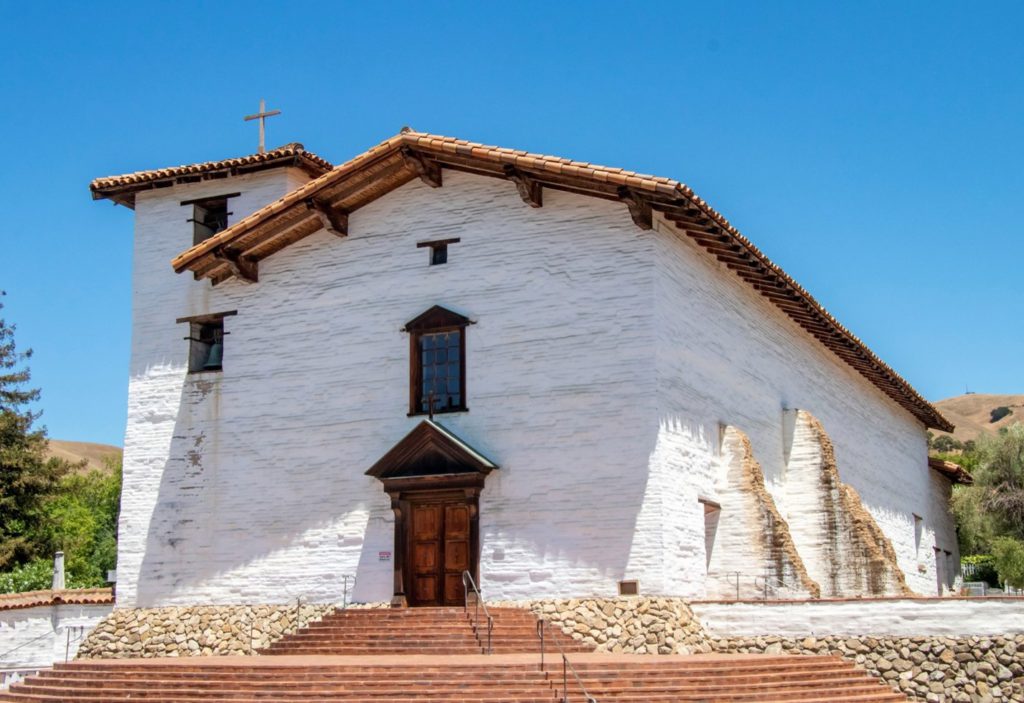
Reconstruction of the Adobe Church The reconstruction of the original adobe church began in 1982 and was completed in 1985. It is considered the most authentically reconstructed of the California Missions. Original materials and building methods were used to the extent possible. Steel reinforcement against earthquakes is hidden inside the walls. The cost of restoration project was $4,381,000. Bay Area philanthropist Walter M. Gleason contributed a lead gift of $1,319,000. The Diocese and parish contributed $2,608,000 and CRMSJ raised an additional $454,000 to fund the project.
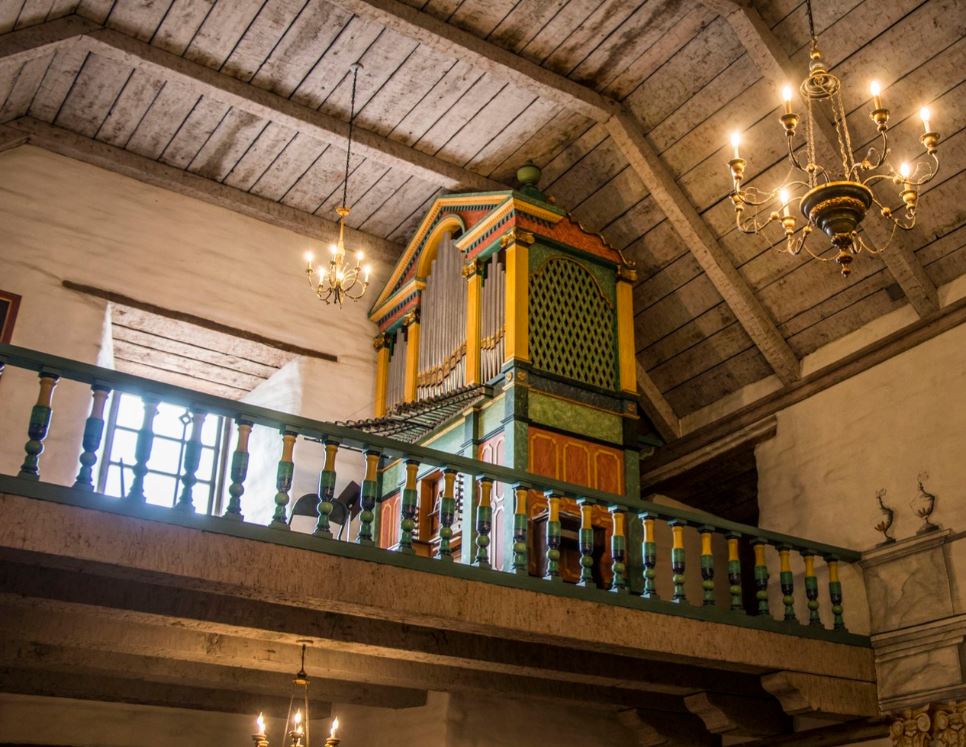
Father Michael P. Norkett, pastor of St. Joseph Parish, coordinated the restoration work through its completion with the guidance of expert consultants provided by CRMSJ. CRMSJ continues to dedicate itself to the research, financing, and preservation of Old Mission San Jose. As part of the reconstruction project, a new Opus 14 organ was created by the Rosales Organ Company of Los Angeles. Crafted in the style of 19th century Spanish instruments, it is decorated in the Greco-Roman revival style of the original 1809 Mission’s decor. Painted in bright colors and sparingly gilded, the organ has the authentic sound of a Mission period instrument. The organ originally requested for Mission San Jose in 1818 was delivered in 1985, 167 years later!
The correct name of Mission San Jose When this Mission was founded in 1797 it was named “La Mission del Glorioso Patriarch San Jose” which translates in English to “The Mission of the Glorious Patriarch Saint Joseph.” Unfortunately, in the early part of the 1900’s a sign was erected on the roof of the Museum which said, “Mission San Jose de Guadalupe,” and some books about the California Missions used this incorrect name for Mission San Jose. Key Dates
|
 To make way for the reconstruction of the 1809 adobe church, the 1869 wooden church was sold for $1 to Christ Anglican Church in San Mateo and moved across the Bay in 1982 where it is still in use today. The Anglican parish restored the wooden church to its original name St. Joseph Church in 2014.