Sandbox Page

This non-public page is to try things out. Try to leave this heading as-is for others.

Lorem ipsum dolor sit amet, consectetur adipiscing elit. Ut elit tellus, luctus nec ullamcorper mattis, pulvinar dapibus leo.

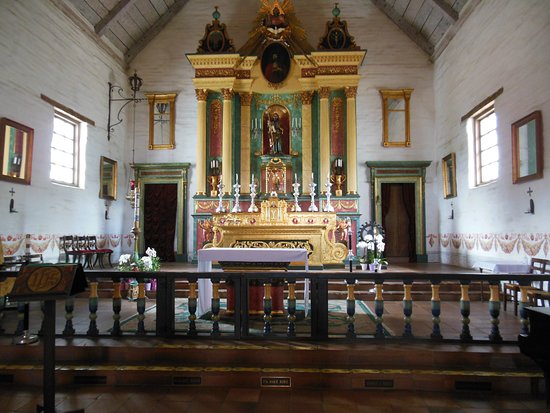
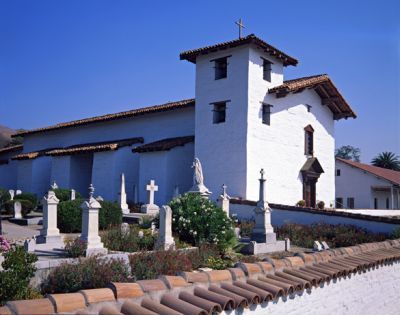
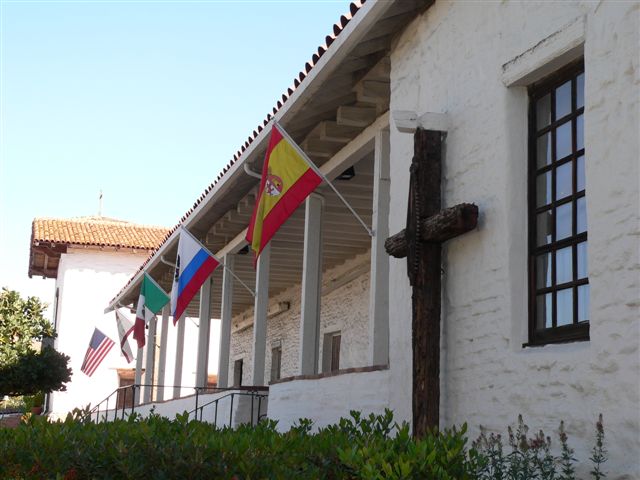
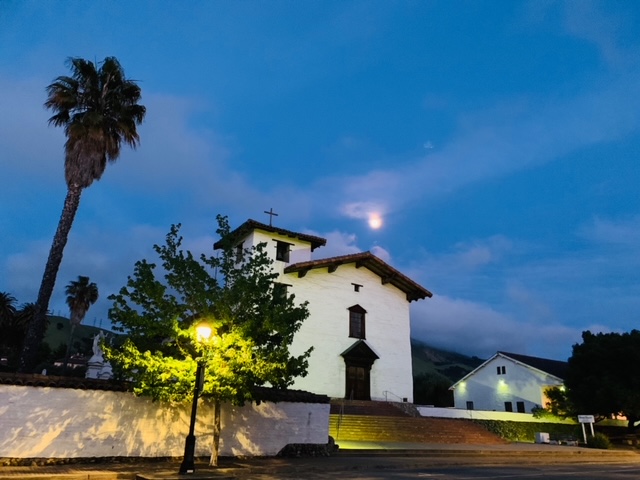
Mission San Jose, Diocesan Shrine of St Joseph
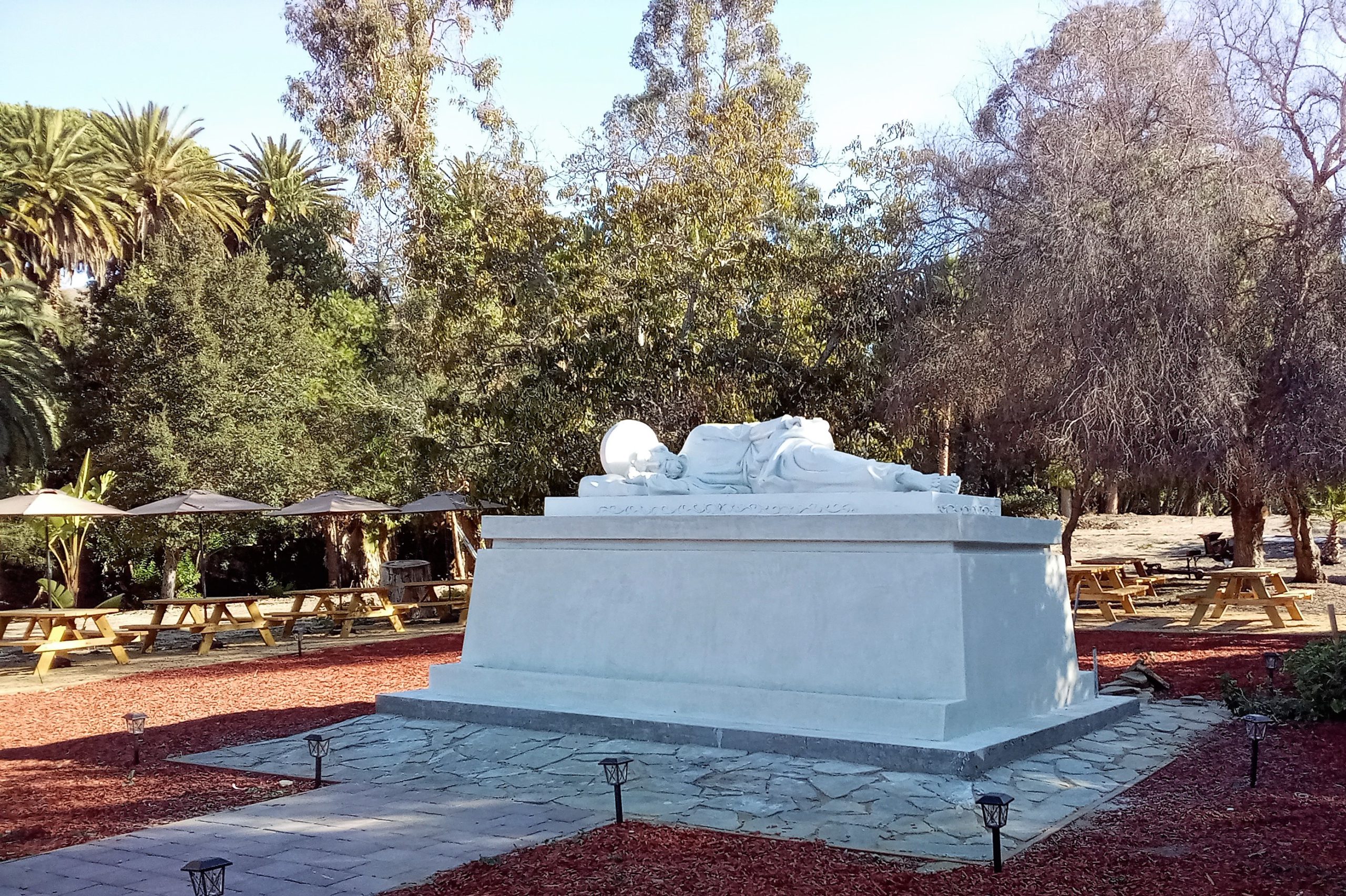
New gate at the Mission Blvd entrance to our new gathering areaMission San Jose, Diocesan Shrine of St Joseph
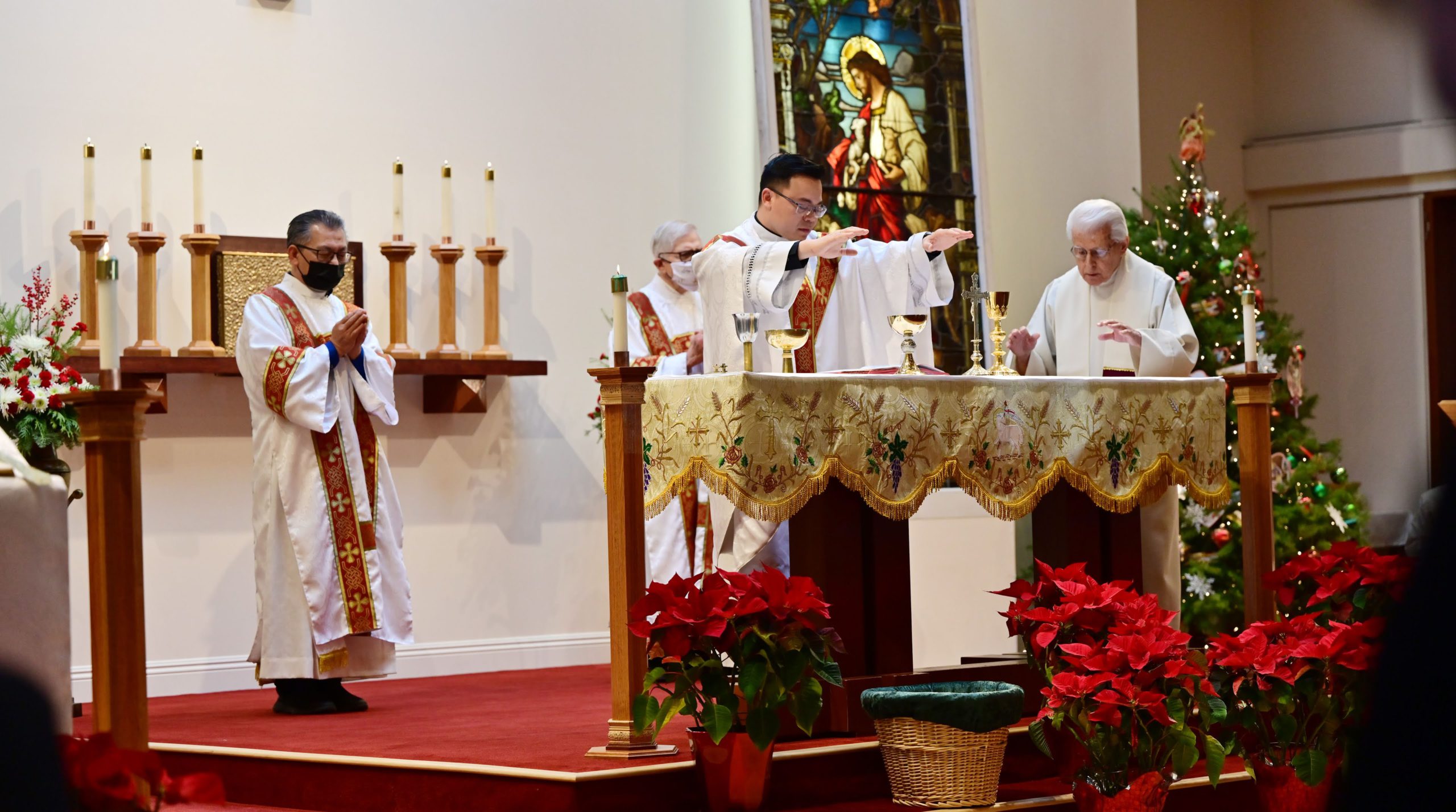
Weekly Homilies in English and Chinese

Following is the Chinese translation on the selected sermons of 10:00 AM English Mass of St. Joseph parish – Old Mission San Jose church in Fremont, CA.

For the English speaking viewers, please click at the link to view the original live stream. The sermon usually starts around 22:00 minutes mark of the live stream – All recorded Mass videos

Disclaimer – for today only!
The Chinese translation is based on the Closed Caption (CC) text that came with the live stream. Hopefully, it can be beneficial to the spiritual nourishment of the Chinese speaking parishioners. It is done to the best of our ability. Any organization or individual involved to the development, publication, circulating or forwarding this translation, are not liable to any damage caused by the material presented here
翻譯者:庸仁 – 歡迎傳閱轉發

2022 January sermons

DateTitleYouTube Link
20220101Happy new Year – Solemnity of Mary, The Holy Mother of God
天主之母節 – 新年快樂 – sermon 講道
YouTube link
20220102The Epiphany of the Lord 真理擁抱了信仰與科學 – sermon 講道YouTube link
20220109The 1st Sunday in Ordinary Time – The Baptism of the LordYouTube link
20220116The 2nd Sunday in Ordinary Time – Mary, our mother can teach us kindness
瑪利亞,我們的母親,可以教導我們如何去關愛 sermon 講道
YouTube link
20220123The 3rd Sunday in Ordinary Time – Word of God
聖言 – sermon 講道
YouTube link
20220130The 4th Sunday in Ordinary Time – Agape love
基督徒的愛 – sermon 講道
YouTube link

2022 Febuary sermons

DateTitleYouTube Link
20220206The 5th Sunday in Ordinary Time – Do not be afraid
不要害怕 sermon 講道
YouTube link
20220213The 6th Sunday in Ordinary Time – What exactly we trust in. Who do we trust in?
我們到底信什麼?又信誰?- sermon 講道
YouTube link
20220220The 7th Sunday in Ordinary Time – Love your enemies, is it worth it?
愛你的仇人,值得嗎?- sermon 講道
YouTube link

2022 March sermons

DateTitleYouTube Link
20220306The First Sunday of Lent sermon 講道YouTube link

Lorem ipsum dolor sit amet, consectetur adipiscing elit. Ut elit tellus, luctus nec ullamcorper mattis, pulvinar dapibus leo.

sandbox page - Other things for testing...

On This Day The Earth Shall Ring


Vinh Danh Thiên Chúa trên trời. Xuống đem bình an cho dương thế.

Hãy trông về, trông về hang đá Bê-lem. Đây Chúa sinh ra như bé thơ trong cơ hàn.

Muôn tiếng tung hô vang khắp nơi: Nhạc muôn đời.

Tha thiết kêu xin: Ơn thứ tha bài đọc mùa thái hoà.
News Test

This is a sample heading

This is a sub-heading

This is some text to go under the heading.

  • This is list item 1
  • List item 2

Please click this Note, this small inline button was created by manually adding the class “small-button” to the “click this” phrase within the HTML text editor within Elementor.

Test of Weekly Liturgy Message widget

In this week's Gospel, Simon Peter recognizes Jesus. He says "You are the Christ, the Son of the living God." Jesus said to him in reply, "Blessed are you, Simon son of Jonah. For flesh and blood has not revealed this to you, but my heavenly Father. And so I say to you, you are Peter, and upon this rock I will build my church". (Mt 16:13-20) The name Peter is derived from the Greek word Petros meaning "stone".

In this week's Gospel, Simon Peter recognizes Jesus. He says "You are the Christ, the Son of the living God." Jesus said to him in reply, "Blessed are you, Simon son of Jonah. For flesh and blood has not revealed this to you, but my heavenly Father. And so I say to you, you are Peter, and upon this rock I will build my church". (Mt 16:13-20) The name Peter is derived from the Greek word Petros meaning "stone".

Liturgy

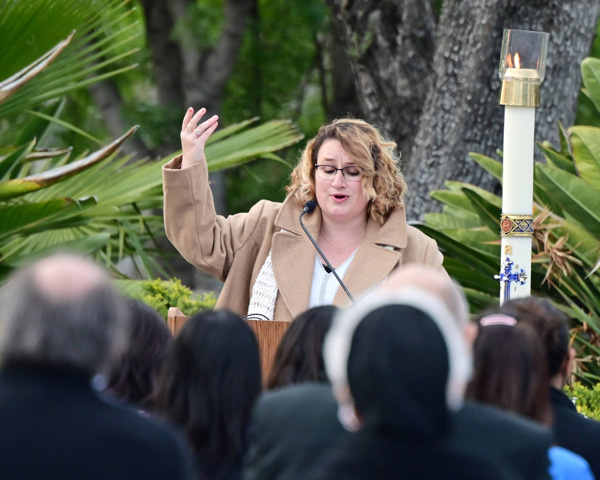
Reflection by Aaron Loverro

“No, Christ is not Jesus’s Last Name”

In the ancient world, and in many older translations of the Bible, it was not uncommon to hear the term “messiah,” or “christ,” being used to simply mean “anointed one.”  In fact, the words share a common definition in their respective ancient Greek and Hebrew: the word Christ comes from the Greek Christós/Khristós (Χριστός) and The Hebrew noun mašíaḥ is from the verb mashah or mashach (משח) which means “to anoint.”  Even the words “Christ” and “Chrism” (the holy oils used in sacramental anointing) have the same Greek root as well.  While these words are still around today, in the past “messiah” and “christ” linguistically functioned as a way to signify importance and were usually reserved for kings, priests, and prophets who had been ceremoniously anointed.

In the time of Jesus, stories of “messiahs” or references to them were common.  Whether it was a revered king, wandering prophet, high priest, or otherwise, there were dozens of well-respected, so-called “messiahs” back then.  However, while these words did garner respect in those days, their verbal significance is surely greater in a modern Catholic context.  For example, certain older translations of the Bible referred to major figures like Cyrus the Great and King David in the Old Testament as a “messiah,” but recently Catholics have come to use this term differently than its original form, and now reserve it only for Jesus, himself.  The Gospel story from Matthew 16:13-20 is likely one reason for this.

While the original definition of “messiah” as “anointed” has been largely forgotten in the context of modern religious conversations, the Apostles in the Gospel story we heard today would have been much more familiar with its archaic connotation.  In the story, when the Apostles finished speculating over the possible identity of the “Son of Man,” guessing the names of many known and respected “messiahs” of old, Jesus made the line of questioning more direct.  The discussion shifted from “Who do people say the Son of Man is?” to “Who do YOU say that I am?”  This is when Simon made the connection that this messiah, Jesus, was anointed by God, himself.

This moment is religiously, culturally, and linguistically significant for a few reasons.  Primarily, we are emboldened to proclaim, like Simon Peter, that Jesus is the Son of God.  In that moment Jesus affirms Peter’s courage and wisdom, gives him the keys to heaven, and creates the Catholic Church.  Also, I would wager that the colloquial usage of “Messiah” and “Christ” today has become synonymous with being God precisely because of this Gospel story (but let’s not also forget the very literal anointing of Jesus’s feet).  Whether or not it is the reason we use the terms differently today, this is the point in history where the terms “Christ” and “Messiah” no  longer simply meant “an anointed one,” but rather, “THE anointed one.”

Add Your Heading Text Here

Recent Comments